
ARTFUL Living
By: Debra May Himes, ASID, IIDA
Photography: by Tony Hernandez
Arizona Foothills: The Lifestyle Magazine for Affluent Desert Living
February 2001
pp. 228-235
SOMETIMES A PROJECT evolves into a complement of elements coming together to form a synchronized, artful creation. Often this creation would be impossible without any one of those elements. Such is the case with this project. Its components include a visionary builder, a creative architect and insightful homeowners.
The project began when Jeff Head of Centurian Development, Inc. put together Bell, Firmen & Head, LLC Investment Group to design and build a custom dream house. Although Centurian Development, Inc. is usually involved with build-to-suit homes, Head wanted to do something new. Thus, the group contracted with James Hann of James Hann Design, AlA to design this 5,250- sq.-ft. house and 517-sq.-ft. casita.
Hann approached this project as he does alI his designs-stressing that good design has a theme. Hann explains that his designs are like a picture coming into focus over time. Many of the decisions come from information he gets from his clients, plus a great deal of his own analysis on how to make the design even better.
The design crux of this home is the deliberate attempt to create a three-dimensional living sculpture with Pinnacle Peak as the focal point and horizontal axis. “The foyer is perfectly centered on Pinnacle Peak,” says Head. The vertical axis of the design is the spiral staircase that spans the three floors of the structure. “The house is as much a work of art as it is a house,” says Hann, “It’s sort of a living sculpture.”
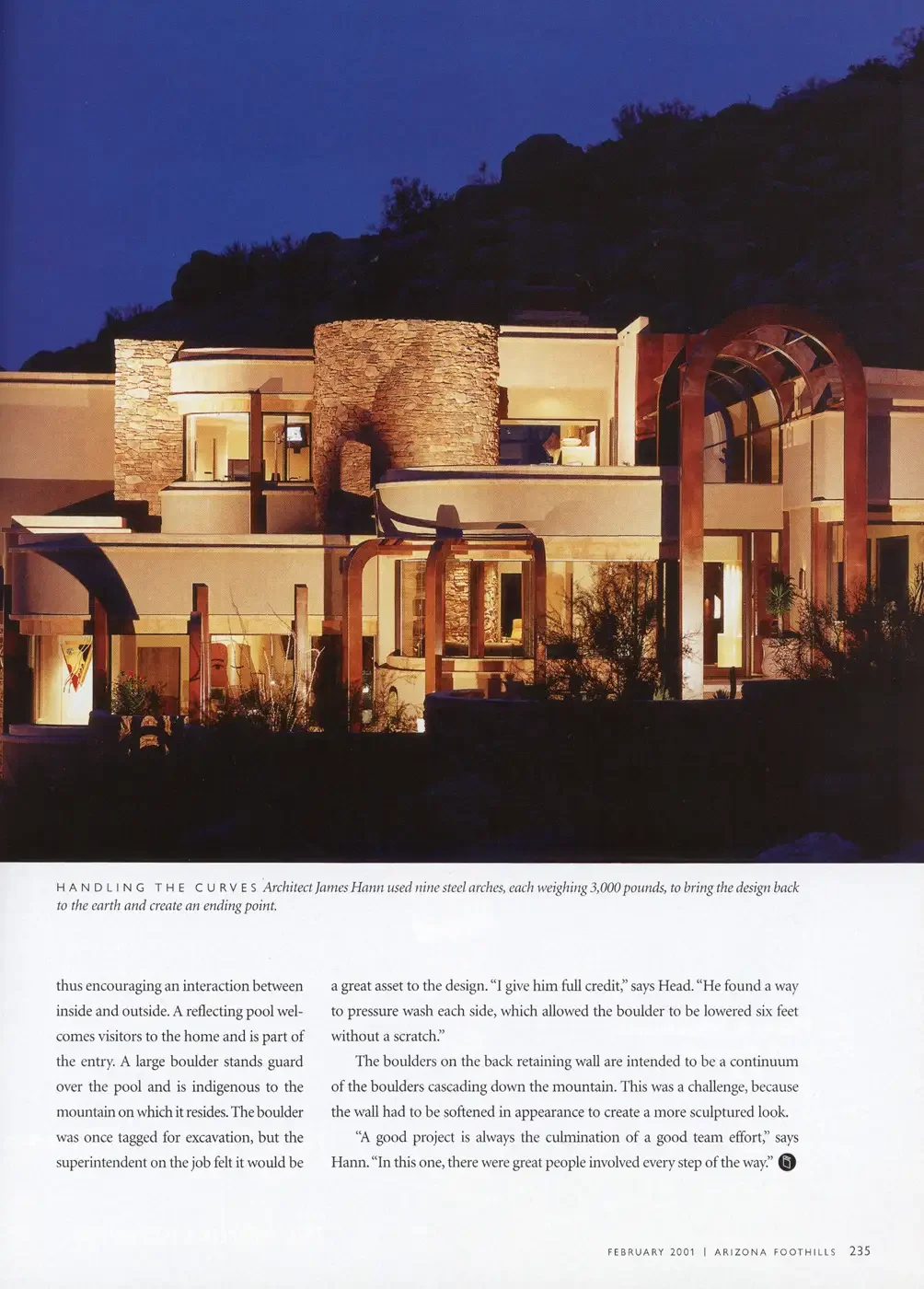
Wanting to create something a little more contemporary and challenging than the norm, Hann chose curvilinear forms to capture the wonderful views from all sides of the home. Most of the rooms have at least one curved corner. And, large expanses of butt-glazed windows were used to maximize the views and echo the curvilinear features of the house.
THE DESIGN CRUX OF THIS HOME IS THE ATTEMPT TO CREATE A THREE-DIMENSIONAL LIVING SCULPTURE.
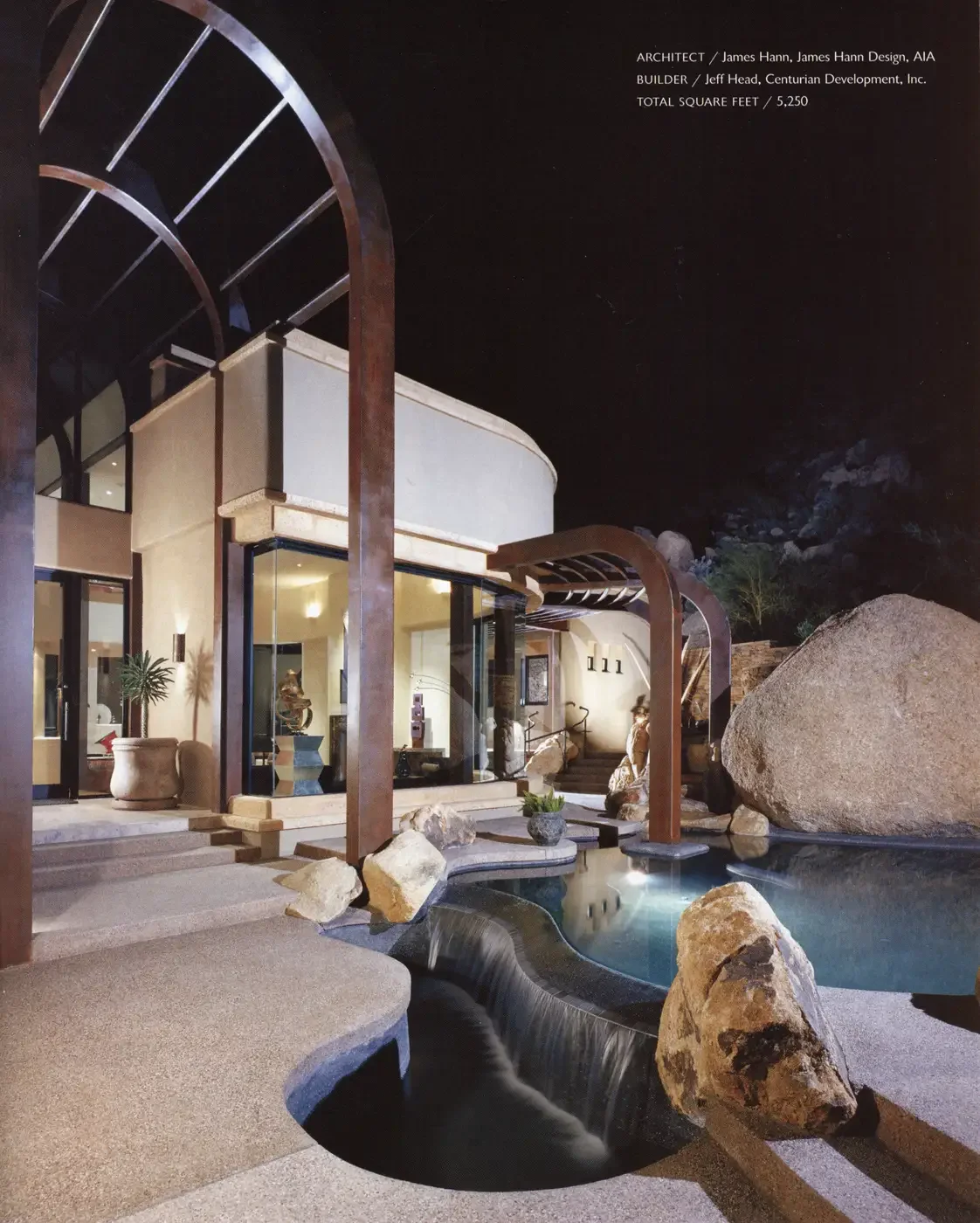
Nine steel arches, each weighing 3,000 pounds, were used as major design elements to capture a modern form. The architect explains that the curved arches bring the design back to the earth and create an ending point. The arches were rust-treated to add a traditional feel and to blend in with the mountains surrounding the home. The finished element reminds Hann of old mining towns found in the deserts of Arizona.
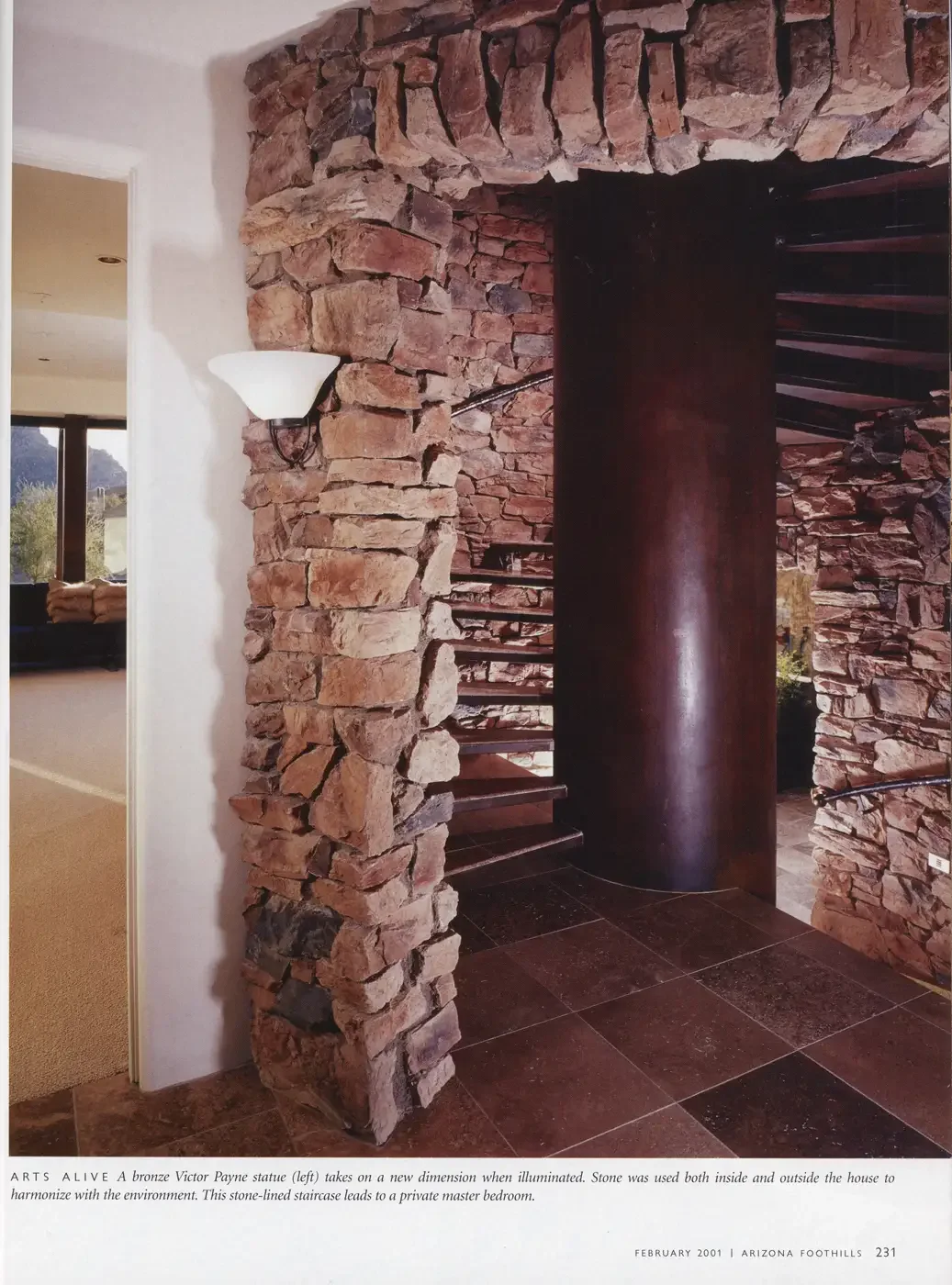
The stone used both on the interior and exterior of the house is intended to look natural and harmonize with the environment. The open, metal spiral staircase is wrapped in stone and crowned with a nine-ft. skylight that illuminates the stonework and custom hammered metal railing.
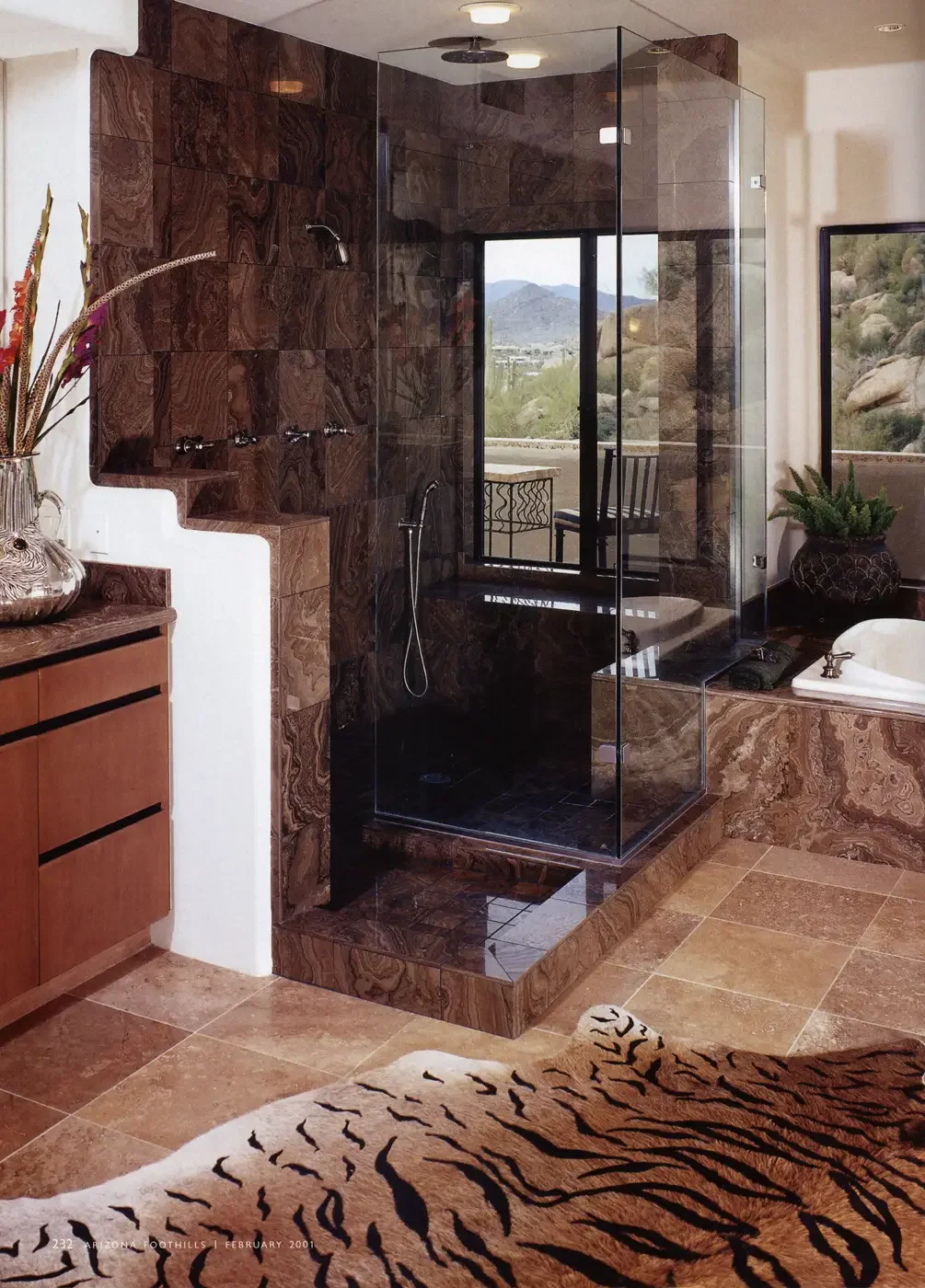
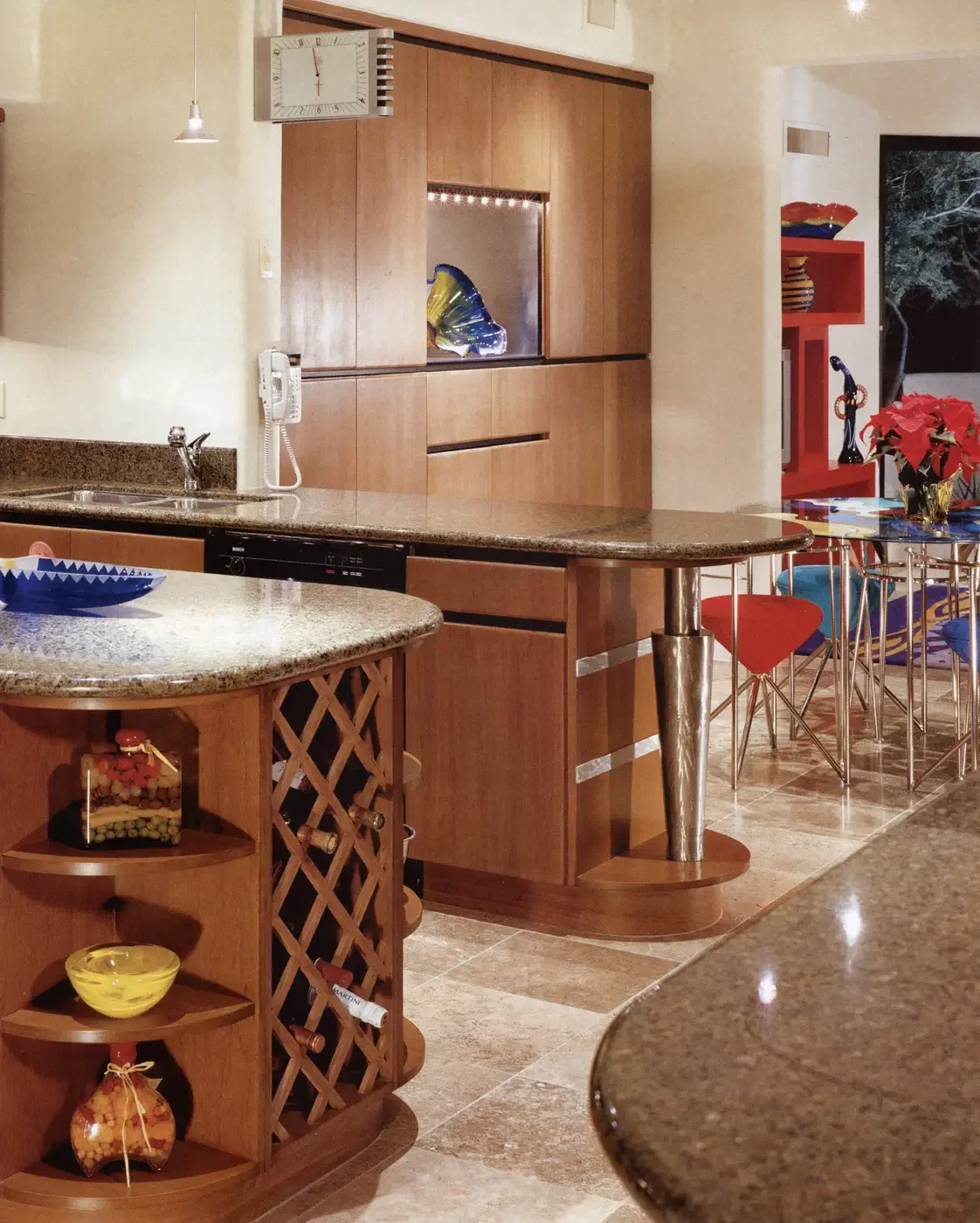
Est, Est, Inc. assisted Head in selecting the hard surface materials found in the home. These materials include Bruno travertine floors, Labrador Antique granite, and Tropic Brown granite.
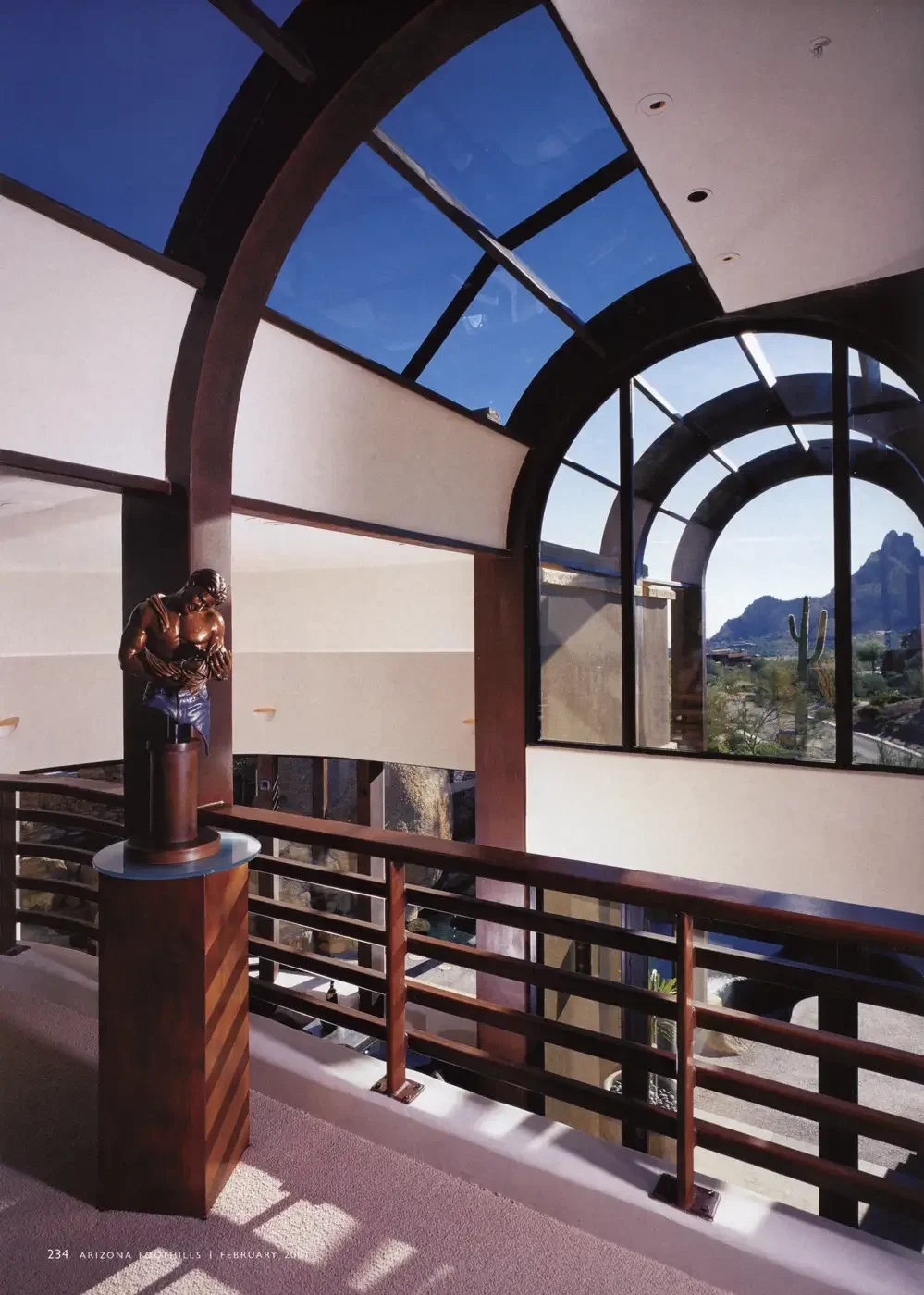
On the home’s second floor, a library/art gallery provides the transition from the master bedroom into the entry area. While viewing some of the homeowners’ fabulous art, one may also look down into the entry area and enjoy some extraordinary views of Pinnacle Peak.
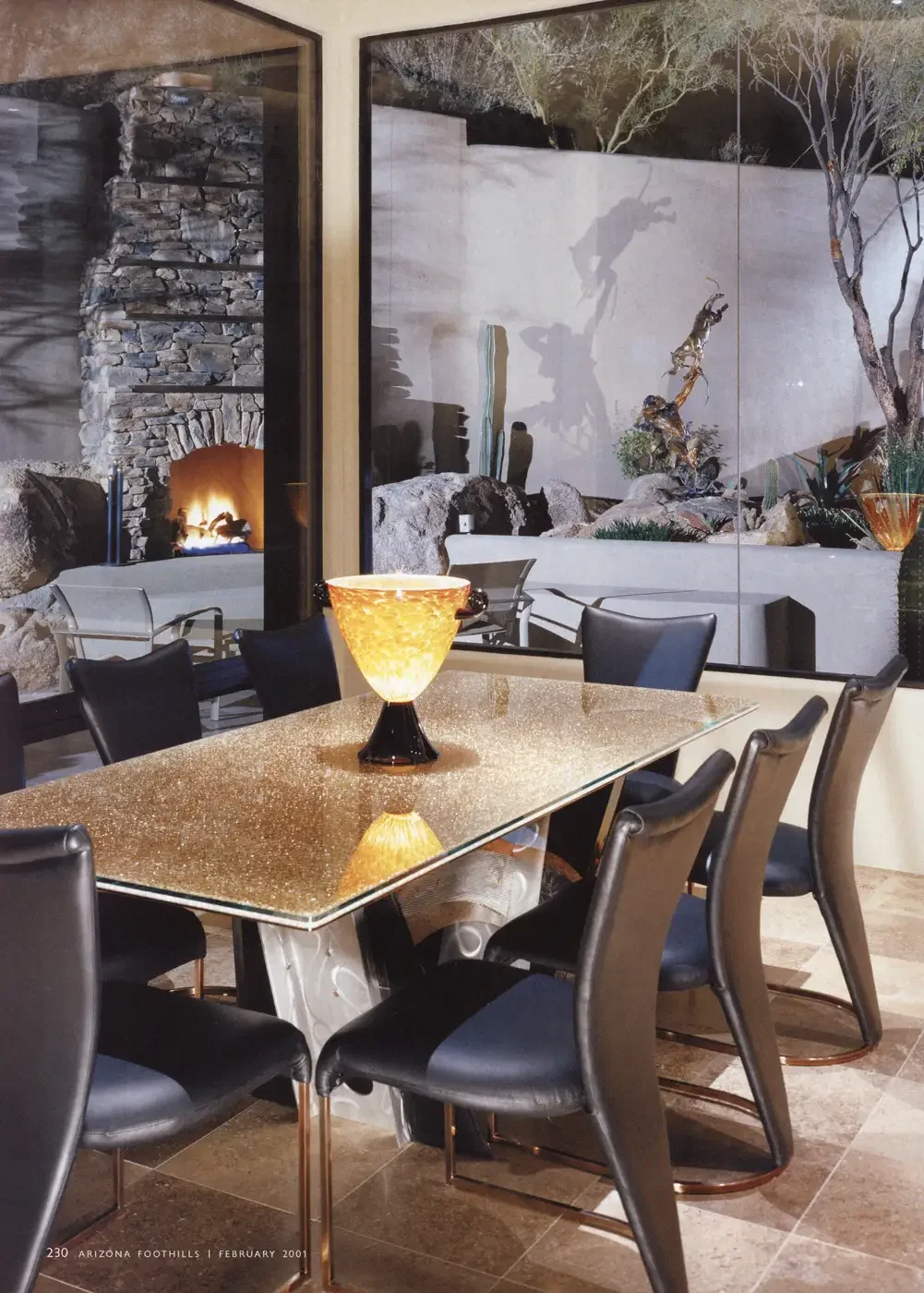
The interior carries out the theme of the house’s architecture. The homeowners, who bought the home after it was constructed, took great care to select furniture and artwork that would accentuate the design. They chose contemporary furniture and specially selected pieces for each focal area of the home. One example of this synergy is found in the back of the house, where a bronze by Victor Payne depicts a man fighting a mountain lion. At night, the lighting on the piece creates a silhouette on the wall, allowing the art to take on another dimension.
Water is another important design element. The architect wanted to walk through the front door and see through the house to the waterfall in the back, thus encouraging an interaction between inside and outside. A reflecting pool welcomes visitors to the home and is part of the entry. A large boulder stands guard over the pool and is indigenous to the mountain on which it resides. The boulder was once tagged for excavation, but the superintendent on the job felt it would be a great asset to the design. “I give him full credit,” says Head. “He found a way to pressure wash each side, which allowed the boulder to be lowered six feet without a scratch.”
The boulders on the back retaining wall are intended to be a continuum of the boulders cascading down the mountain. This was a challenge, because the wall had to be softened in appearance to create a more sculptured look.
“A good project is always the culmination of a good team effort,” says Hann. “In this one, there were great people involved every step of the way.”