
Good, Better, Best
Time and Creative Attention Bring Out the Best in an Arizona Home
By: Roberta Landman
Photography by: Scott Sandler
Phoenix Home & Garden
February 2012
Pp: 78-85
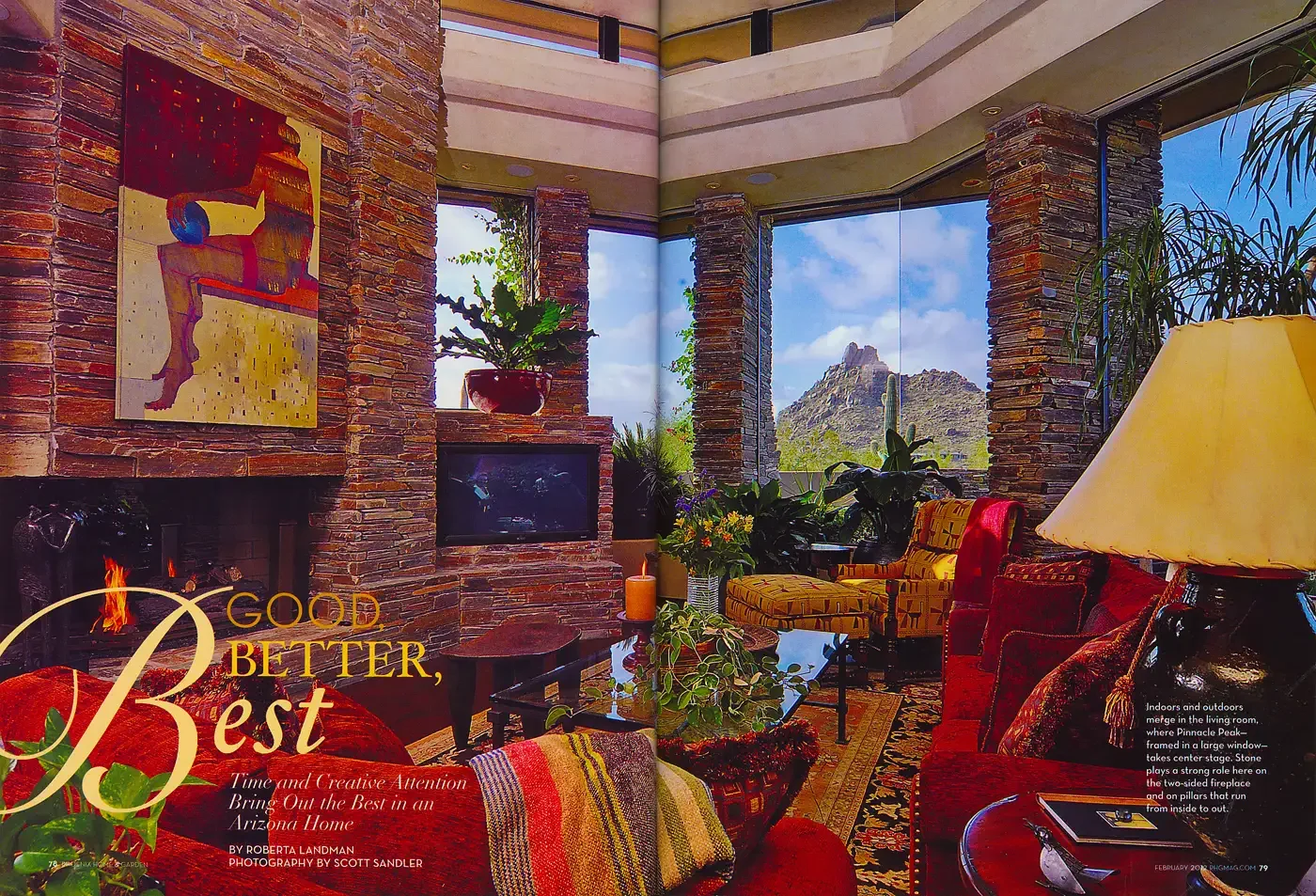
COLUMNS LEADING TO THIS award-winning north Scottsdale home’s entrance are encrusted with stacked stone-evocative of their boulder-strewn surroundings. The same pillars continue inside the house, where they serve as structural elements and dramatic visual “sculpture.”
The residence’s distinct organic flavor, stretches of light-emitting windows, multiple views of Pinnacle Peak, and rooms that are not overly large are what appealed to the homeowner when she and her husband searched for a place in the desert.
A psychologist and competitive athlete with a love of fine art, she worked closely with interior designer Ellen Beth Harper, ASID, to put her personal stamp on the house.
One could say that this dwelling was an evolution of sorts. Architect James Hann, AIA, had designed the Southwest Contemporary dwelling about 10 years ago as a spec house built by Kensington Homes. Harper was a member of the original design team, doing space-planning and other design work.
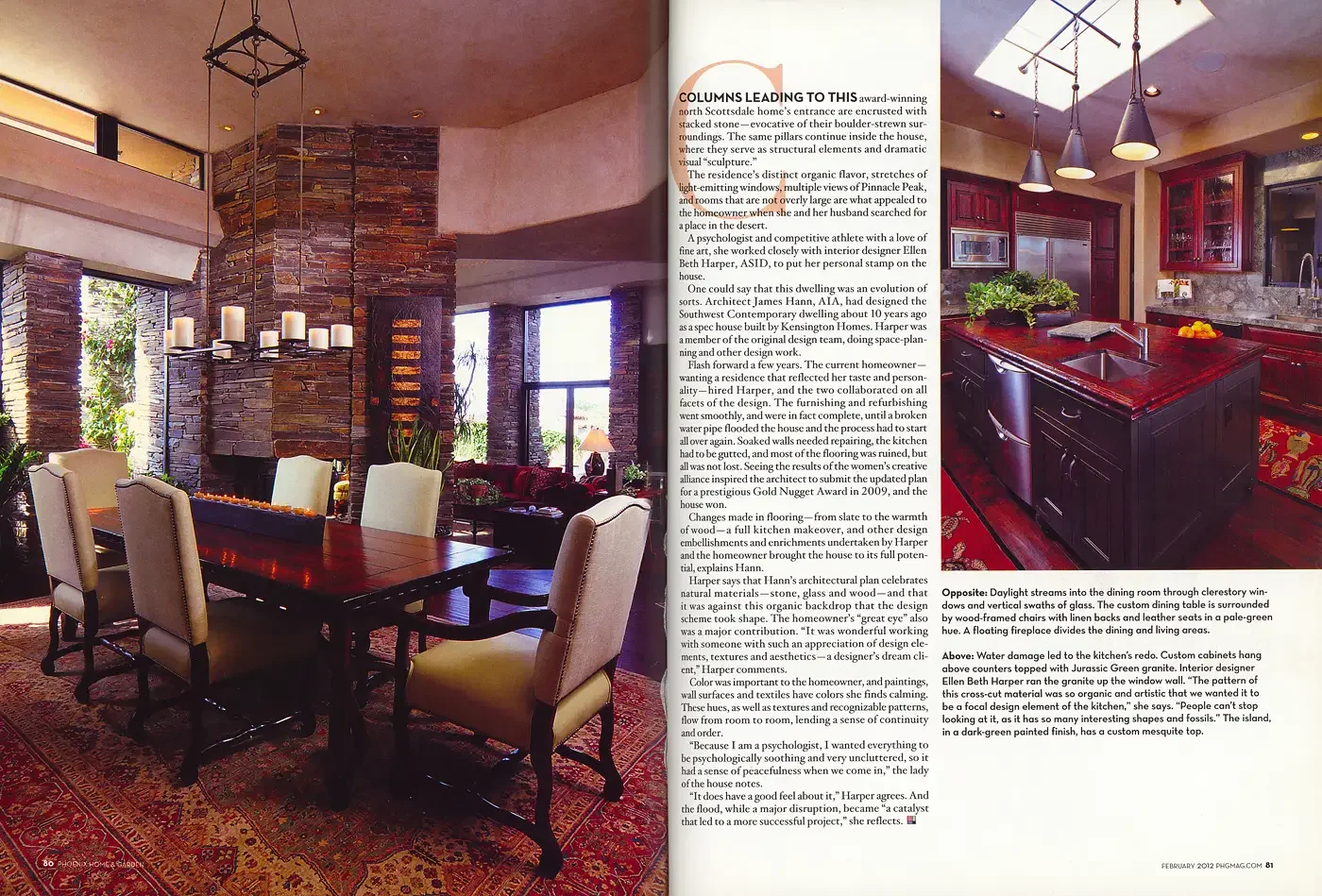
Flash forward a few years. The current homeowner—wanting a residence that reflected her taste and personality—hired Harper, and the two collaborated on all facets of the design. The furnishing and refurbishing went smoothly, and were in fact complete, until a broken water pipe flooded the house and the process had to start all over again. Soaked walls needed repairing, the kitchen had to be gutted, and most of the flooring was ruined, but all was not lost. Seeing the results of the women’s creative alliance inspired the architect to submit the updated plan for a prestigious Gold Nugget Award in 2009, and the house won.
Changes made in flooring—from slate to the warmth of wood—a full kitchen makeover, and other design embellishments and enrichments undertaken by Harper and the homeowner brought the house to its full potential, explains Hann.
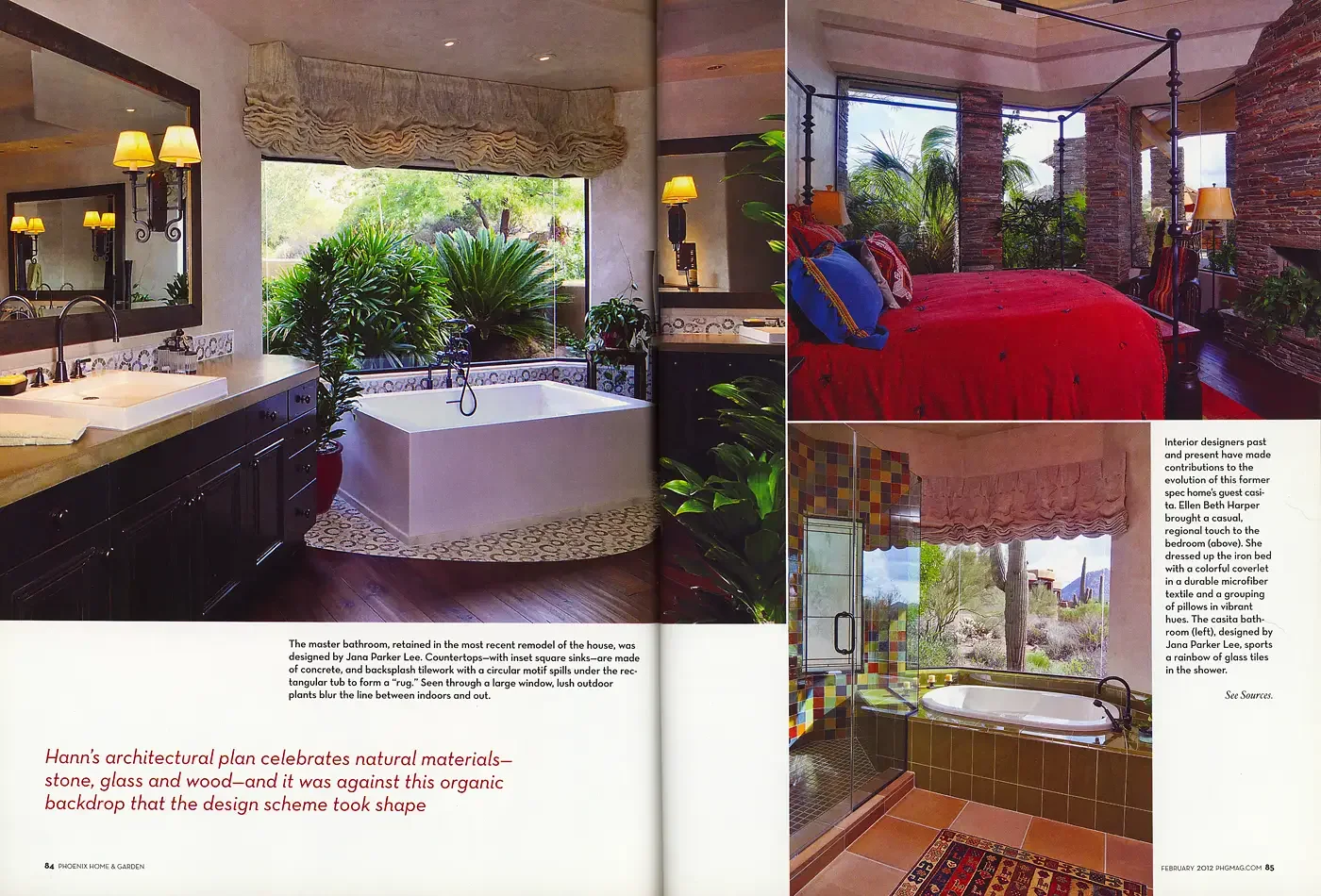
Harper says that Hann’s architectural plan celebrates natural materials—stone, glass and wood-—and that it was against this organic backdrop that the design scheme took shape. The homeowner’s “great eye” also was a major contribution. “It was wonderful working with someone with such an appreciation of design elements, textures and aesthetics–a designer’s dream client,” Harper comments.
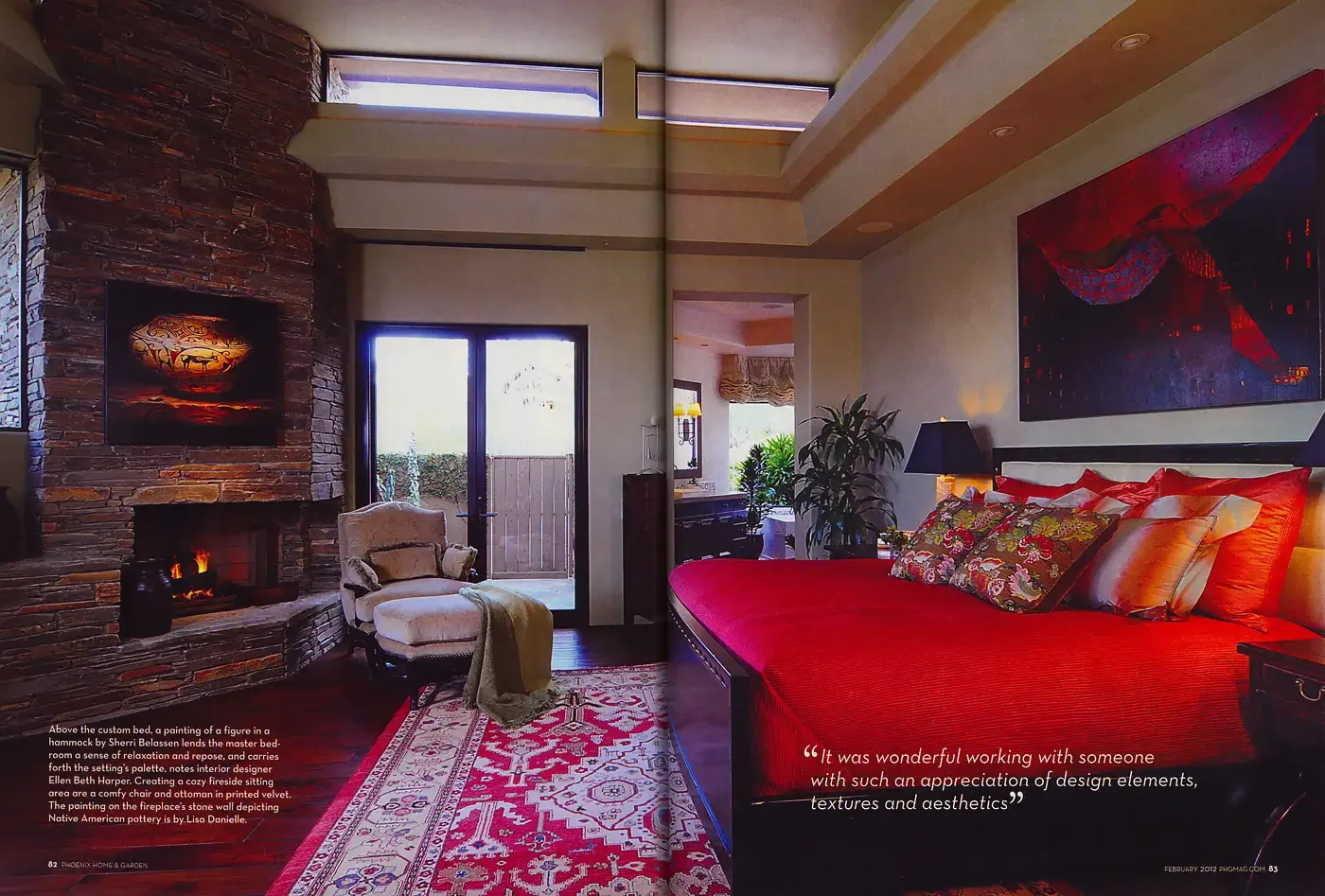
Color was important to the homeowner, and paintings, wall surfaces and textiles have colors she finds calming. These hues, as well as textures and recognizable patterns, flow from room to room, lending a sense of continuity and order.
“Because I am a psychologist, I wanted everything to be psychologically soothing and very uncluttered, so it had a sense of peacefulness when we come in,” the lady of the house notes.
“It does have a good feel about it,” Harper agrees. And the flood, while a major disruption, became “a catalyst that led to a more successful project,” she reflects.